India, the new myth
Midnight's ChildrenIndia, the new myth is Saleem Sinai’s name for the nation as a collective dream: a country made real through shared will, but never detached from history, violence, or the individual lives caught up in its making. The idea links India’s independence to the novel’s recurring concern with births, memory, and the unstable boundary between personal identity and national history.
A Nation Imagined into Being
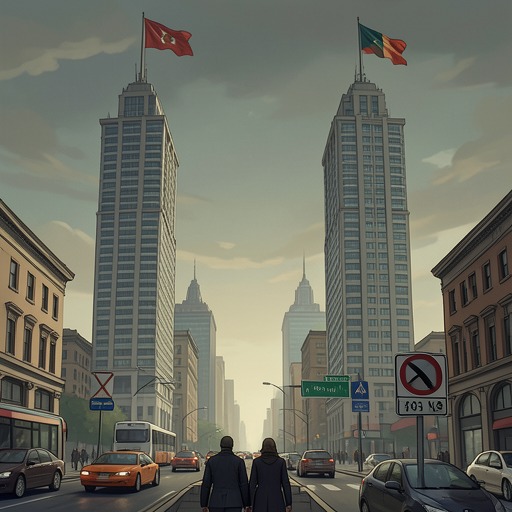
As independence approaches, the novel presents Bombay as poised for a new national beginning. Rumors of ill omens circulate, yet the city anticipates a festival: alongside August’s familiar celebrations, a new nation is about to claim its freedom. The narrator describes India as both ancient and newly imagined, a country whose existence depends on people agreeing to dream it together.
That collective dream belongs to people of different regions and communities, and makes possibility itself part of the national myth. Yet the image is deliberately double-edged. India is a shared fiction, compared with the other powerful human constructions of money and God; its imaginative force does not make it unreal, but shows how belief can give a nation its form.
Independence and the Cost of Renewal
The moment of national imagining unfolds alongside Partition’s bloodshed. Saleem turns away from violence in Punjab and Bengal to concentrate on the private drama of a birth, while acknowledging that the new nation’s recurring renewal will be marked by blood. The contrast refuses to let celebration erase the cost of political change: public history and intimate life occupy the same moment, even when the narrator’s attention shifts between them.
The novel makes that overlap tangible in its account of Saleem’s family history. The child born at the hinge of independence is not simply the offspring of his parents; he belongs, in the narrator’s formulation, to his historical time as well. The private birth and the birth of the nation become parallel events, binding individual identity to a collective story without reducing one to the other.
The Myth in the Body and in Memory
The relationship between body and history recurs in episodes where a physical sensation or remembered scene changes what Saleem can know. At Jallianwala Bagh, his grandfather Aadam Aziz’s sneeze throws him off balance as firing begins, and he survives by falling among the crowd. The episode makes bodily contingency part of the family’s passage through national violence: an involuntary movement, rather than a grand design, determines who lives.
Years later, Saleem’s own body becomes a site where private knowledge and family history collide. Hiding in a washing-chest, he overhears Amina speak the name Nadir and realizes that her past exceeds the family story he has been given. His involuntary sniff then precipitates a bodily change associated with his emerging powers. In another retrospective passage, he considers how bodily alteration can unsettle the boundaries between inside and outside, parent and child, private feeling and public consequence. These episodes make the national myth less a smooth founding legend than a history encountered through vulnerable bodies and incomplete knowledge.
A Fragmented Inheritance
The idea of India as a shared dream also informs Saleem’s understanding of the midnight-born children: they are partly shaped by their parents and partly by the historical moment into which they arrive. The national myth thus passes into questions of inheritance and identity, while refusing the reassurance of a single, stable origin.
That refusal shapes the form of the memoir. Near its climax, Saleem admits that he has only scraps of memory and must build an account from fragments, including a briefly glimpsed file and scattered information. His difficulty completing the story mirrors the difficulty of treating national history as a settled, unified narrative. India, the new myth endures in the tension between collective imagination and historical fact: a dream powerful enough to bind lives together, yet repeatedly interrupted by violence, memory’s gaps, and the teller’s uncertainty.